
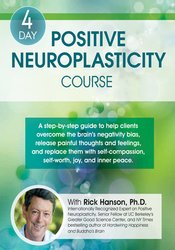
4-Day: Positive Neuroplasticity Course with Rick Hanson, Ph.D.

$45.00
This Product is shared via google drive download link, So please share your correct Gmail id while placing the order .Please note that there are no CME points or certificate associated with this course Samples for Courses Can be found here : Free Samples Here!
Format: Audio and Video
Copyright: Oct 21, 2019
4-Day: Positive Neuroplasticity Course with Rick Hanson, Ph.D.
Duration: 24 Hours 12 Minutes
Format: Audio and Video
Copyright: Oct 21, 2019
Rick Hanson, Ph.D., is a NY Times bestselling author and an internationally recognized leading expert on positive neuroplasticity.
Dr. Hanson draws on a 40-year background in clinical psychology, human potential, and neuroscience to help thousands of people rewire their brains, overcome their mental health challenges, and become the fullest version of themselves.
His work has been praised by Stephen Porges, Tara Brach, Peter Levine, Kristine Neff, and Dan Siegel; featured in national media, and embraced by millions of readers as a voice they can trust.
This course recording is a unique opportunity for you to train with Dr. Hanson himself and discover how your clients can enjoy more successful therapeutic outcomes from the science-backed strategies of Positive Neuroplasticity!
Watch Dr. Hanson as he shares an invaluable toolbox full of accessible practices along with a reliable blueprint for how you can more skillfully assess and treat clients and catalyze lasting change.
Watch this hands-on 4-day recording and learn how to:
- Treat anxiety, depression, trauma, and shame with positive neuroplasticity techniques
- Foster rapid and far-reaching healing and growth with evidence-based strategies
- More skillfully assess which psychological resources your clients need most for better treatment outcomes
- Turn clients’ experiences into lasting inner strengths for improved clinical results
- Skills and tools to make lasting changes inside the brain
- Rapidly overcome therapeutic obstacles by using positive psychological material to soothe and replace negative material
- More effectively work with couples, children, and other special populations
Don’t miss this rare opportunity to train with a leading expert on positive neuroplasticity and feel the satisfaction of bringing new and effective paths to healing to your clients.
Target Audience
- Counselors
- Social Workers
- Psychologists
- Psychotherapists
- Psychiatrists
- Therapists
- Marriage and Family Therapists
- Addiction Counselors
- Occupational Therapists
- Occupational Therapist Assistants
- Nurses
- Other Helping Professionals
Objectives
- Explain how to incorporate the combination of client’s challenges, vulnerabilities and resources into clinical assessment for a better understanding of a client.
- Describe the importance of the two-stage process of learning as it relates to clinical outcomes.
- Demonstrate three fundamental ways to engage the client’s mind skillfully for clinical practice.
- Define the practice of positive neuroplasticity as relates to clinical practice.
- Explain the science of Positive Neuroplasticity and how to teach the methods to clients.
- Utilize two psychological resources that can be used to teach clients their personal strengths.
- Demonstrate two practices to use clinically for clients to have beneficial experiences.
- Incorporate exercises to help clients learn ways to deepen experiences for healing.
- Name three ways to encourage clients to internalize beneficial experiences and its importance for growth.
- Describe three blocks to the deliberate internalization of beneficial experiences that can slow clinical work.
- Explain the research of the three-stage evolution of the human brain and how it relates clinically.
- Identify key resource experiences to meet clients’ needs.
- Discuss case studies of specific psychological resources showed to improve psychological disorders such as anxiety, trauma and depression.
- Explain the different levels of client engagement with painful or upsetting thoughts, feelings, memories, or sensations and treatment implications.
- Practice skills to help clients holding in awareness for a positive thought or feeling as well as a negative one.
- Provide perspective and clinical practices for self-compassion.
- Utilize practices to help clients manage threats from calm strength rather than fear, anger or helplessness.
- Teach clients skills to enjoy life’s pleasures without getting driven or addicted.
- Demonstrate ways for clients to internalize experiences of accomplishment and success in everyday life.
- Guide clients in the importance of being aware of both a desired behavior and an anticipated reward of it.
- Summarize the importance and research of client self-acceptance and self-worth for better treatment outcomes.
- Describe how clients can approach relationship issues from compassion and self-respect rather than resentment and inadequacy.
- Practice a psychological cue each to evoke a sense of peace, contentment, and love to use in session.
- Discuss Rick Hanson’s HEAL process and how it can relation to treatment.
- Model two ways to incorporate the HEAL process in psychotherapy.
- Integrate the HEAL process for the treatment of anxiety, depressed mood, addiction, and trauma.
Outline
THE ESSENCE OF POSITIVE NEUROPLASTICITY: FUNDAMENTALS OF POSITIVE BRAIN CHANGE AND HOW TO MEET YOUR CLIENTS’ CHALLENGES BY HELPING THEM GROW DURABLE PSYCHOLOGICAL RESOURCES
The critical role of psychological resources to deal with clients’ challenges and vulnerabilities
- The stress-diathesis model: Challenges, vulnerabilities, resources
- Resources located in world, body and mind
- The special opportunity and value of mental resources
- Overview of mental resources (i.e., psychological resources) that are clinically relevant
- Why most of our mental resources are learned: acquired, not innate
- The necessary two stage process of any learning, including acquiring all mental resources: activation and installation
- Why experiencing doesn’t equal learning
- Why most therapeutic experiences do not have lasting value
- Activity: Help clients identify significant challenges and vulnerabilities, and then identify relevant psychological resources for these
The Neuropsychology of Learning
- The brain’s evolved negativity bias
- Clinical implications of the low conversion of therapeutic experiences to lasting changes of neural structure and function
- Major mechanisms of experience-dependent neuroplasticity
- What is positive neuroplasticity
- Activity: Discussion about the clinical implications of the negativity bias
- Activity: Explain the negativity bias to a client
Clients as Active Learners
- Environmental, behavioral and mental factors that increase learning, and thus the acquisition of psychological resources
- The special opportunity and value of mental factors of learning
- Empower clients to be active agents in their healing and growing
- Two kinds of mental factors: Contextual and engagement
- The opportunity and value of engagement factors
- Clinical benefits of clients actively engaging the experiences they are having to steepen their learning/healing/grown curves
- Activity: Experience the two-stage process of learning while using engagement factors
- Activity Explain the two-stage process of learning to a client, and then describe engagement-type mental factors of learning
The Three Ways to Engage the Mind Productively
- Letting go – observing, accepting, exploring the contents of consciousness
- Letting go – preventing, decreasing, or releasing negative or traumatic material
- Letting go – creating, sustaining, or increasing positive materials
- What is mindfulness; why mindfulness is part of letting go and letting in
- How letting be, letting go, and letting in form a natural healing sequence
- Activity: Experience the three ways to engage the mind
- Activity: Explain the three ways to engage the mind to a client
- Activity: Practice the three ways to engage the mind
Teaching Positive Neuroplasticity to Clients
- The science of positive neuroplasticity
- How to guide clients through experiential practices
- Identify and work through key blocks to having and internalizing beneficial experiences, such as distractibility, fear, shame, anxiety, social expectations and trauma
- Activity: How to explain positive neuroplasticity to a client
HAVING, ENRICHING, AND ABSORBING EXPERIENCES: HOW TO MAKE THE MOST OF THE POSITIVE EXPERIENCES CLIENTS ARE ALREADY HAVING, TURNING PASSING STATES INTO LASTING TRAITS
Overview of the HEAL Framework of Engagement Factors of Learning
- Have a beneficial experience
- Enrich it – increasing the neural activity underlying an experience
- Absorb it – increasing the sensitivity of the memory-making mechanisms of the brain
- Link positive and negative materials
- Activity: Experience the HEAL process
- Activity: How to explain the HEAL process to a client
Having Beneficial Experiences
- Notice beneficial experiences in the foreground and background of awareness
- Create beneficial experiences; overview of many ways to do this
- The five elements of an experience: Thoughts, perceptions, emotions, desires, actions; why each is an opportunity for acquiring an aspect of a psychological resource
- Deal with “yes, but” and other blocks to clients having beneficial experiences
- Activity: Experience the five elements present in an experience of playfulness
- Activity: Guide a colleague to be aware of the five elements present in an important experience
Enriching Experiences to Increase Their Neural Registration
- Five factors of Enriching: Duration, intensity, embodiment, novelty, salience
- Activity: These three factors applied to an experience of a psychological resource
- Activity: Explain these three factors to a client
- Activity Guide a colleague through using these three factors of Absorbing to deepen the internalization of an experience of psychological resource
LINKING POSITIVE AND NEGATIVE MATERIALS: USE POSITIVE MATERIALS TO SOOTHE, CONTEXTUALIZE, AND REPLACE NEGATIVE MATERIALS
Overview of Linking Positive and Negative Material
- Implicit and explicit memory
- How negative material is consolidated, activated, and reconsolidated in the brain
- The window of time during which the reconsolidation of negative material can be disrupted
- Three ways to manage negative material: Grow relevant psychological resources, associate positive to negative, disrupt the reconsolidation of the negative
- Self-compassion: A key resource for managing negative material, and an example of Linking
- Activity: Experience the Link step
- Activity: Explain the Link step to a client
- Activity: Guide a colleague through the Link step
Discussion and Application of Material Presented
- Four ways to use positive neuroplasticity and the HEAL framework with clients
- Adapt positive neuroplasticity for children
- Activity: Discussion with a colleague about using positive neuroplasticity and the HEAL framework with one or more challenging clients
- Activity: How to explain the Link step to a client
- Activity: Guide a client through the Link step
KEY PSYCHOLOGICAL RESOURCES: HOW TO IDENTIFY SPECIFIC PSYCHOLOGICAL RESOURCES THAT ARE MATCHED TO CLIENTS’ PSYCHOLOCIAL ISSUES
Our Three Needs and Two Ways of Meeting Them
- The three fundamental needs of any animal, including humans: Safety, satisfaction, connection
- The meeting of these needs through Avoiding harms, Approaching rewards, and Attaching to others
- Social brain theory
- Why there is more to human life avoiding pain and approaching pleasure
- The reptilian, mammalian, and primate/human stages of brain evolution and their relationship to the Avoiding, Approaching, and Attaching systems
- Our basic two ways of meeting needs: The Responsive and Reactive modes, without stress and with stress
- Explain what it means when clients go to Responsive mode and Reactive mode and the impact of each
- Activity: Discussion with a colleague about these three needs and two modes for meeting them
Identifying Key Psychological Resources Matched to Clients’ Needs
- Demonstration by instructor with a volunteer of identifying key resources
- Overview of resources for safety, satisfaction & connection
- The value in repeatedly internalizing experiences of needs sufficiently met
- The metaphors of repeatedly petting the lizard, feeding the mouse, and hugging the monkey
- Activity: Guide a colleague to identify key resources for an issue
- Activity: Experience of a basic sense of safety, satisfaction, and connection: peace, contentment, and love
Helping Clients to Identify and Internalize Key Psychological Resources
- Demonstrate by instructor with a volunteer of identifying and internalizing one or more key resources, using the HEAL framework
- Discussion of what helped this go well
- Activity: Guide a colleague to identify and internalize one or more key resources, using the HEAL framework
GROWING STRENGTHS FOR SAFETY: ESTABLISH A FOUNDATION OF CALM AND SAFETY IN WHICH CLIENTS CAN GAIN THE CONFIDENCE THEY NEED TO MEET CHALLENGES
Key Resources for Being and Feeling Safe
- Indicators of challenges to safety: fear, anger, helplessness
- Why we evolved to overestimate threats and underestimate opportunities and resources
- Blocks to reducing anxiety
- Activity: Experience of calm strength
- Activity: Experience of noticing you are basically alright right now
- Activity: Explain to a colleague how to have and internalize more experiences of calm strength and basic alright-ness, and feel less anxiety
Help Clients to Increase Resources for Safety
- Additional resources for safety: sense of agency, protection, and refuge
- Our vulnerability to acquiring learned helplessness
- Discussion of what helped this go well
- Special applications to trauma
- Activity: Guide a colleague to identify and internalize resources for being and feeling safer, using the HEAL framework
GROWING STRENGTHS FOR SATISFACTION: BUILD HEALTHY MOTIVATION IN CLIENTS AND HELP THEM SET UP AND ACHIEVE GOALS
Key Resources for Being and Feeling More Satisfied
- Indicators of challenges to satisfaction: Frustration, loss, ennui, boredom
- Ambition without driven-ness, aspiration without attachment
- Activity: Experience of gratitude and gladness
- Activity: Experience of goal accomplishment and feeling successful
- Activity: Explain to a colleague how to have and internalize more experience of gratitude, happiness, and success, and feel less frustration
Help Clients to Increase Resources for Satisfaction
- Liking and wanting in the brain; enjoy without craving
- How to use associational learning to increase motivation
- Special applications to addiction
- Activity: Guide a colleague to increase motivation for something, using the HEAL framework
GROWING STRENGTHS FOR CONNECTION: IMPROVE CLIENTS’ RELATIONSHIPS AND INCREASE THEIR SENSE OF SELF-WORTH
Key Resources for Being and Feeling More Connected
- Indicators of challenges to connection: hurt, rejection, loneliness, hatred, inadequacy, shame
- Normal narcissistic needs
- Activity: Experience of feeling cared about and caring
- Activity: Guide a colleague through internalizing psychological resources for greater self-worth, using the HEAL framework
Help Clients to Increase Resources for Connection
- Three neural circuits of empathy
- The strong heart: combining kindness and assertiveness, love and power
- Activity: Explain the circuits of empathy to a client and exploring how the client could be more emphatic in daily life
- Activity: Guide a colleague the psychological resources that support the strong heart, and how to have and internalize experiences of these resources
Managing Challenges From the Responsive Mode
- Activity: Experience of peace, contentment, love
- Activity: Explore with a colleague how to manage a key challenge from the Responsive mode, including what this would be like and feel like
- Activity: Guide a colleague through having and internalizing an experience of a key resource for managing challenging from the Responsive mode, using the HEAL framework
APPLICATIONS AND IMPLICATIONS: LEARN HOW TO ADAPT AND APPLY THESE METHODS TO MEET A VARIETY OF NEEDS AND SITUATIONS
Use Positive Neuroplasticity and the HEAL Process for Particular Clinical Issues and Situations
- In mindfulness training
- With depression
- Specific issues from participants
- Activity: Discussion with a colleague about applications to one or more clients
Clinical Consequences of Societal Factors
- How economic, cultural, and other environmental factors affect mental health, for better or worse
- How internalizing psychological resources and living increasingly from the Responsive mode helps people be less vulnerable to manipulations of fear and anger, possessiveness and greed, and grievance and vengeance toward others
- Final discussion
- Activity: Experience of peace, contentment and love
LIMITATIONS OF THE RESEARCH AND POTENTIAL RISKS
Related products


Critical Care \ Emergency medicine




Neurology courses